Beyond the Concrete: Regrounding Ceremony in Earth Care
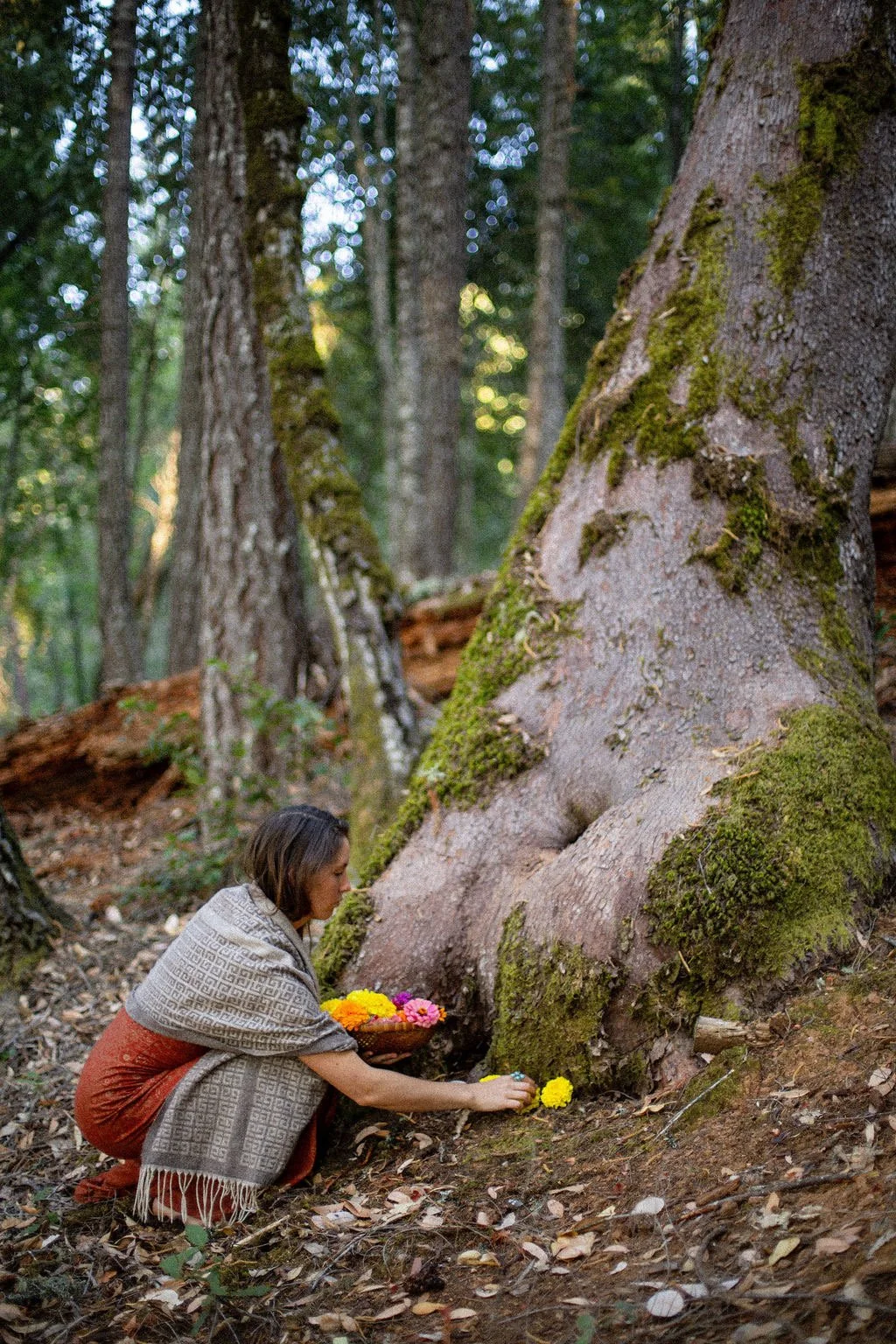
There’s a rising tide of earth‑cherishing voices, beautiful humans gathering in circles of song, prayer, and medicine. Many live in cities, stewarding remembrance and renewal through rooftop rituals, living room altars, and weekend gatherings. They sing to the water, pray to the fire, and speak of reciprocity with the land. Yet often, there is a quiet disconnect: a relationship to the elements that is more lyrical than lived.
This is not an accusation, but an observation. Much like how yoga is far more than touching your toes. Time on the mat can lead into the 8 limbs of practice, similarly, plant medicine ceremony invites us toward a similar unfolding. Ceremony can open the door, but integration is where the path begins.
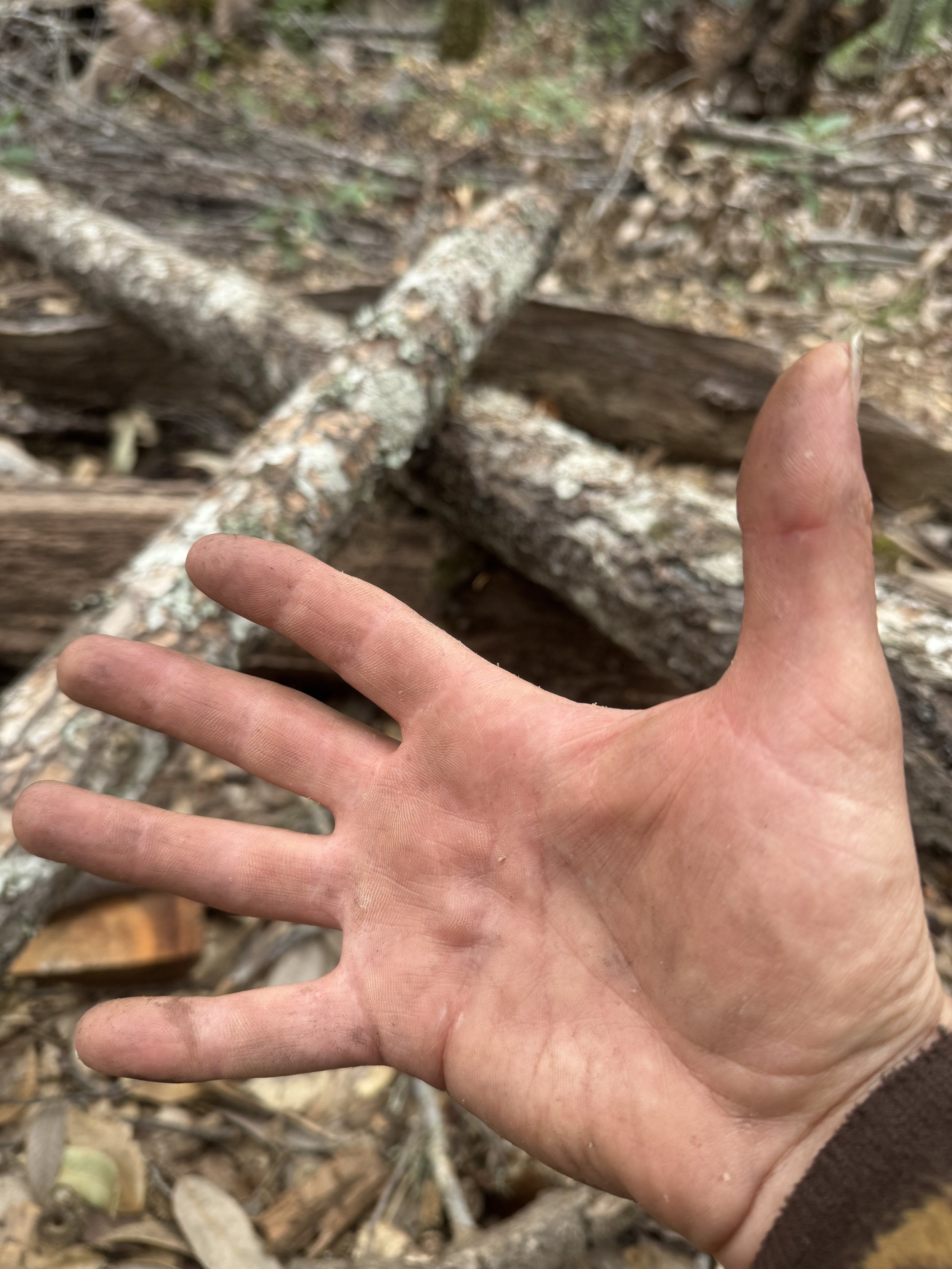
At Wanosh Forest Gardens and Healing Grounds,, we see this bridge being built every day. People arrive carrying reverence for the elements, and by the end of a weekend, they’re hauling buckets of mulch or clay, tending young fruit trees, stacking firewood, or kneeling in the watershed learning how a tiny shift in contour can change the course of a hillside’s future. The poetic becomes practical; the prayer becomes participation.
This is the heart of the gap we’re invited to close: letting inner listening become outer action. When embodied, that listening becomes effort as shovels in the soil, and sweat on the shoulders in addition to the quiet offerings. Real relationships with the living systems that hold us.
In these times of ecological, political, and spiritual unraveling, this integration is more urgent than ever. The Great Turning requires more than transcendence; it requires participation. The deep internal listening cultivated in ceremony, through plant medicines, song, healing arts, and council must flow into the tending of land, water, fire, and food. Integration asks that we bring our prayers into form. Not just in art, but in compost piles, watershed regeneration work, burned‑area restoration, and the ongoing care of the places that feed us and beyond.
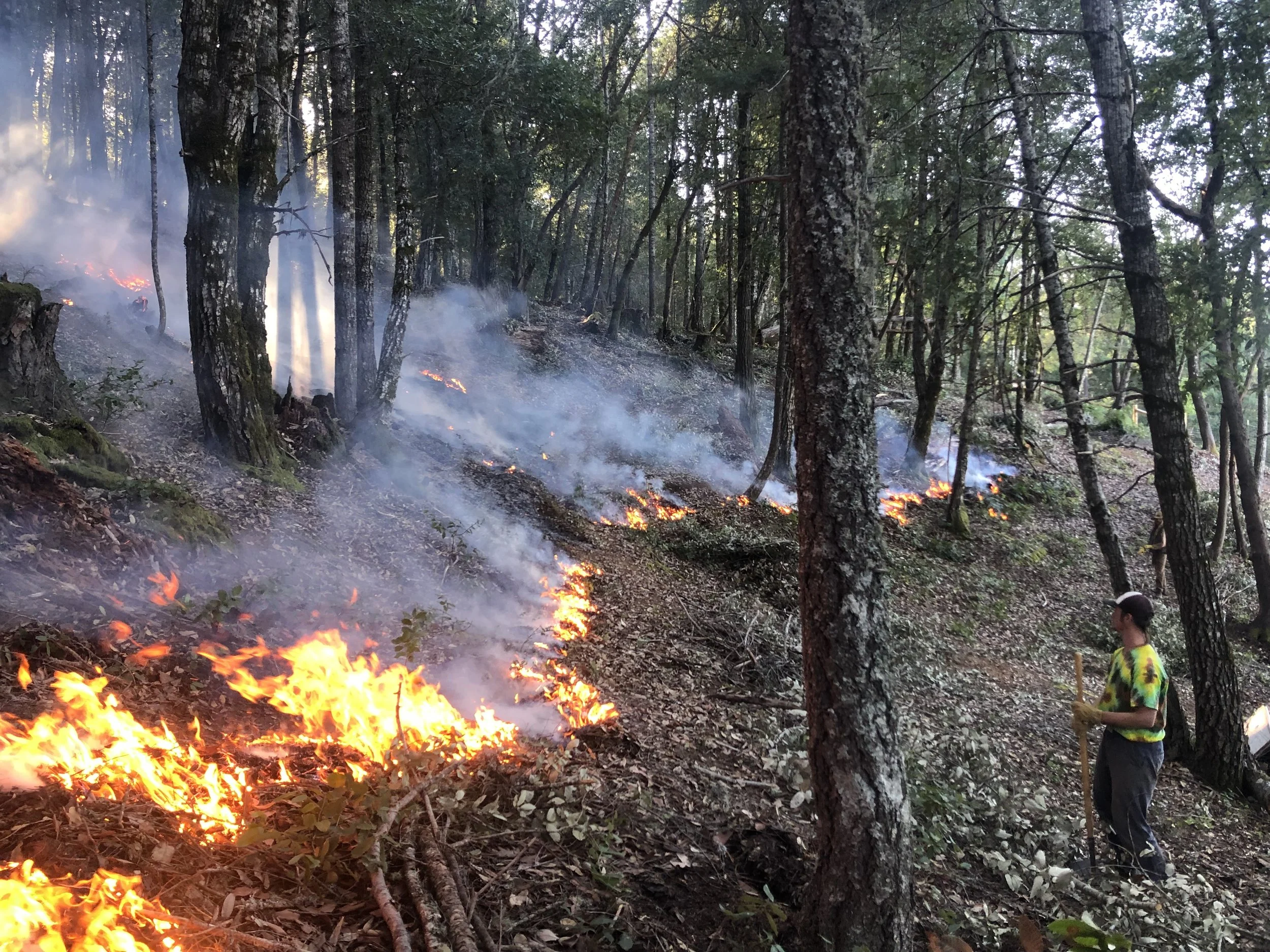
When governmental scaffolding trembles and industrial systems falter, it won’t be visions alone that sustain us. It will be the skills and relationships we’ve built with land, food, water, and one another that do. At Wanosh, during good fire‑season trainings or spring planting weekends, or summer natural building workshops you can feel the truth of this in people’s bodies: the relief of doing something real, something that matters.
This recontextualization is ancient. In the cultures from which many plant medicines come, the healing path and the tending path are inseparable. To heal is to garden, to gather wood, to know the water, to feed and steward fire. The healer is also a farmer, a builder, a caretaker of place. Ceremony is not a weekend retreat; it is a way of life that tends the village.
Today, we often emphasize trauma healing, nervous system restoration, and rediscovering belonging, which are all sacred and necessary work. But when healing remains disconnected from the land that holds us, it floats unanchored. Medicine without earth care is like a song without a drumbeat: beautiful, but unable to move the body of the world.
The invitation now is to braid the threads back together. To move from the romanticism of earth cherishing to the realism of earth participation. To let our ceremonies extend the altar into the garden beds, the watershed terraces, Wanosh's forest edge and beyond. To remember that land is not metaphor but the living body of our belonging.