The Long Arc of Embodiment – Rediscovering Belonging Through the Living World
Every meaningful path eventually asks something simple but demanding of us: not just to awaken, but to stay awake. Not just to feel connected in the peak moments, but to live that connection in the quiet ones. I’ve learned this slowly at Wanosh, walking the same trails in different seasons, tending the same trees through drought and abundance, showing up for the same conversations in the shade of the same Douglas firs. Embodiment has revealed itself not as a goal, but as a rhythm I keep returning to; one shaped by land, community, and the patient unfolding of time.
When I first arrived at a life of land stewardship, I thought the biggest shifts would happen in ceremony or in the heat of inspiration. And those moments mattered because they cracked me open. But what truly shaped me were the mornings when nobody showed up for work trade, and it was just me and the wheelbarrow. Or the evenings after workshops at Wanosh, when the laughter faded and I swept the hearth alone. Or the winters when the gravity-fed water system failed and I trudged up the mountain with tools and frustration until something in me softened. These were the places where teachings took root, where I learned that embodiment is a way of inhabiting the world.
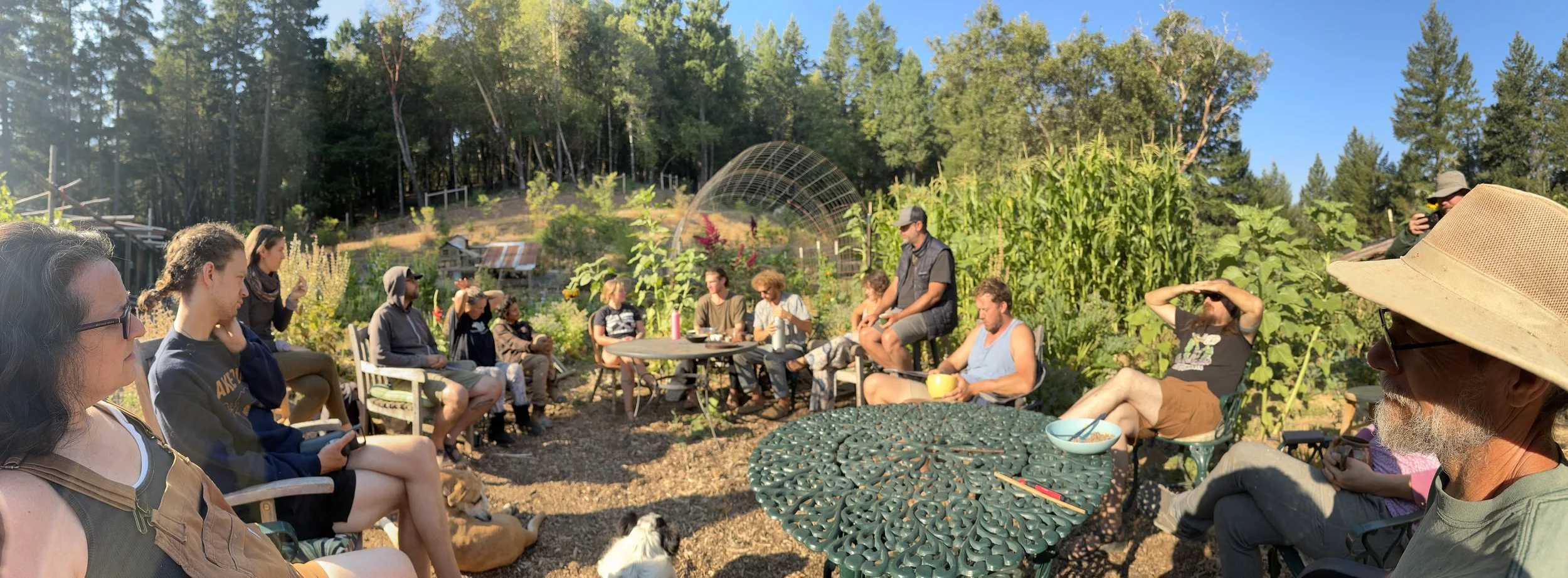
Living closely with the land has shown me how easily modern life pulls us out of relationship. Many people arrive here at Wanosh carrying a quiet ache they can’t quite name. They speak of burnout, longing, numbness, or the sense that something in their life is out of rhythm. And almost always, after a few days of tending the fire, harvesting from the garden, or listening to the creek, that ache starts to reveal itself. It’s the residue of disconnection from the more-than-human world.
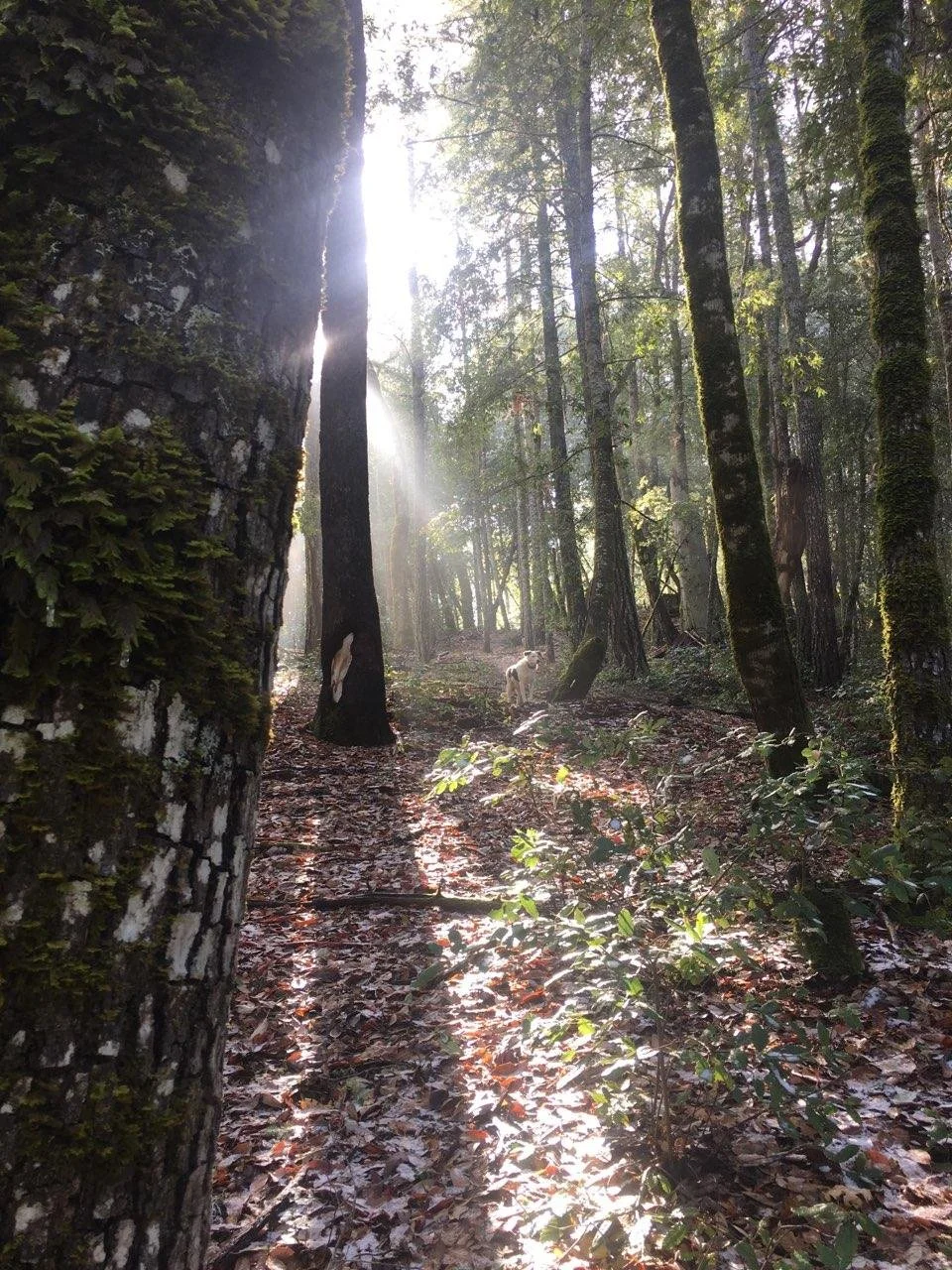
The land teaches differently than any workshop. She teaches through repetition. Through a broken irrigation line that forces you to feel your feet. Through mornings when the frost reminds you what season you’re actually in. Through the subtle shift in birdsong that tells you spring has begun, even if the calendar says otherwise. Through the way everyone at Wanosh naturally slows down as the days shorten, or gathers closer as the fire season approaches. These are the rhythms that shape belonging.
And in the midst of this, the refinement begins. Embodiment has asked me to let go of distractions, identities, and habits that block my capacity to be present. It’s asked me to compost expectations, to prune relationships when necessary, and to listen when the land whispers that something in my life needs reorienting. Sometimes that refinement looks like breathwork or council practice. Sometimes it looks like washing a looming pile of dishes after a community meal or splitting rounds of wood until the mind quiets. The tools don’t matter as much as the sincerity behind them.
One winter stands out sharply in my memory. The rains didn’t come. The land dried faster than we could adjust. I spent long days troubleshooting water lines, hiking the slope again and again, praying for pressure to return. My body hurt. My patience frayed. But somewhere in that repetition, something shifted. The work became prayer. The rhythm became belonging. A small mantra rose up in me: If the water doesn’t come, put prayer in the pipe. And eventually,with patience and perseverance, the water began to flow.
Over time, service has woven itself into the heart of my understanding of embodiment. True service doesn’t inflate the self; it dissolves it. Whether we’re splitting poles together for the timber-framing workshops, rebuilding the communal kitchen after a storm, or simply supporting someone through a tough season, service roots us in reciprocity. It reminds us that we are part of something larger, and that tending the land is inseparable from tending each other.
As the years at Wanosh have unfolded, I’ve watched how this long arc of embodiment transforms people. Their presence deepens. Their pace slows. Their listening expands. And without effort or announcement, they begin to bridge worlds… the inner and outer, the ancient and emergent, the human and more-than-human. Their prayers become visible in the way they walk, plant, speak, and relate.
Embodiment isn’t glamorous, and it doesn’t happen quickly. It asks for consistency, for patience, for humility. But if we stay with it, if we keep tending the embers long after the ceremonial fire cools, our lives gradually become the offering. Not the weekend kind, but the kind that ripens a soul