The Inner Teacher in the Age of Artificial Intelligence
What happens when an Indigenous person, who has never had contact with the modern world and whose knowledge comes from generations of listening to the land, is handed a smartphone? What happens when that phone finds its way into the heart of a sacred plant medicine ceremony, where people are trying to hear the voice of the forest—not notifications? This is not a hypothetical. It is already happening.
At Wanosh Forest Gardens, where the creek still carries the scent of forest duff and the mornings begin with birdcall rather than alarms, this question feels especially pressing. We live and teach at the intersection of earth‑based wisdom and modern tools. Our days oscillate between chainsaws and tea ceremony, digging swales, tending the subtle currents of council, and attempting to gain traction by writing and social media. We witness firsthand the ways technology can serve or sever our relationship with the living world. More and more in the effort to connect with new folks through social media and witnessing the results the inquiry gets louder. How often are calls to connect met with silence, and the stats/insights show there's hundreds of people seeing the call, and none feeling to respond... the most basic technology of our ancestors was to talk to one another... As phone calls fall away to texting and voice memos and story highlights, the connecting becomes more and more dissociated..... more talking to everyone.... And to no one.
Looking at artificial Intelligence, it is often presented as objective, neutral, all‑seeing. But if its input is drawn almost entirely from the dominant paradigm, disconnected from the living systems of land, lineage, and culture…how could it possibly hold true objectivity? If the liminal knowledge of intact cultures and their ways of sensing, listening, relating has not been woven into the algorithm, what becomes of its intelligence?
One of my teachers used to remind me: “We need many teachers, but Nature is the grand teacher that ultimately guides the teacher within.” At Wanosh, this is not metaphor. It is daily practice. We calibrate ourselves through water reading, bird tracking, the thinking like fire and how the forest canopy communicates about its health. When we listen this way, our priorities shift. The compass moves from extraction to reciprocity, from dominance to relationship.
Meanwhile, our nervous systems are continually being calibrated to the pulsing feed of digital life. The modern glow of screens competes with the glow of firelight. Our attention, pulled by speed and stimulation, drifts away from the slow intelligence of place. What is our relationship to light and shadow when much of our illumination now comes from devices instead of dawn, dusk, moon, and ember?

Across wisdom traditions, silence is the doorway to knowing. Yet in modern culture, we look outward to phones, status, and performance for meaning. But what happens when the inner voice has been buried beneath noise? What happens when the values embedded in our technologies become the lens through which we attempt to heal, relate, and grow?
We must ask: what informs the collective heart?
At Wanosh, the land continually reminds us that reciprocity is a spiral of feedback. The built environment speaks. Modern society orients everything toward the market. But here, the center is water. The forest. The fire hearth. Meals shared after long days of tending. What would shift if human culture redesigned itself around these centers again? If the timing of our days honored the sun and the rains instead of digital clocks and deadlines?
How do we move from designing for control to designing for relationship? How do we remember, as modern people dependent on technologies made from extractive, often exploitative systems, that at the center of our hearts lives an ancestral memory...a memory of once being Indigenous to somewhere?
These aren’t romantic longings for a mythic past. They are essential remembrances. Blueprints for continuity. Until machine intelligence can listen to the birds, hear the river, and dream with the plants, its intelligence is limited and contained within the narrow worldview of its makers.
Technology, like fire, is neutral. Our relationship with it is not. Fire can warm a home or burn it down. So can AI.
There is no true ascension without dissension. A tree rises only as deeply as it roots. A culture without roots drifts, forgets, collapses. Our ancestors lived in homes made from the very earth beneath their feet. Their calendars were sky‑bound. Relationships based on long impromptu conversations. Their identity was woven with place, not separate from it.
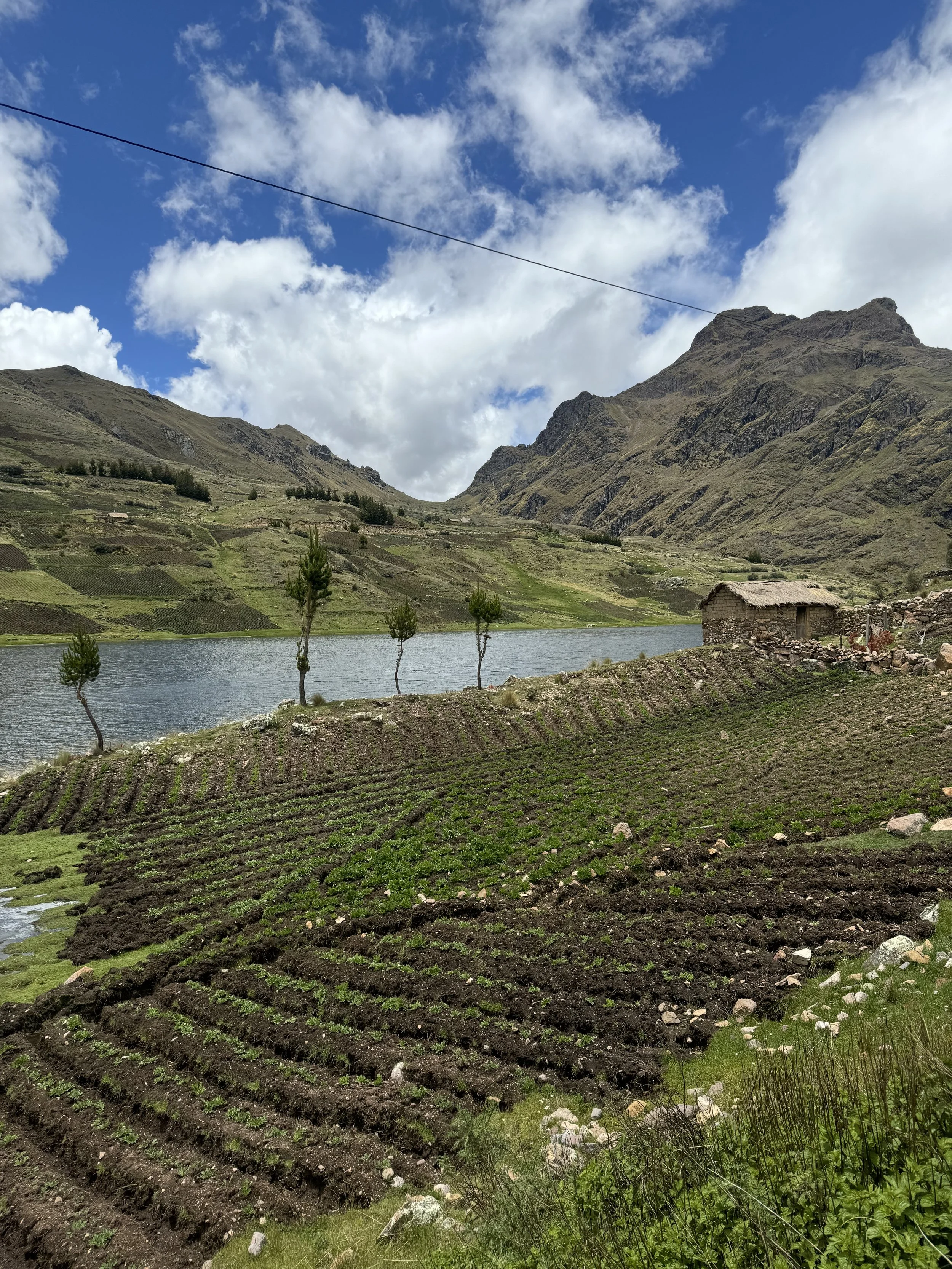
So how do we recalibrate to this quiet force within us? How do we honor, protect, and uplift the nature and cultures that remain intact? How do we embody their lessons today? Imagine if more of humanity lived in homes built from local earth again. Imagine if our materials decomposed gracefully. If time was told by moon and season. If community gathered not just to build but to be built through ritual, story, silence, and fire.
Many cultures hold that plants are our relatives. The Tzutujil people of Guatemala teach that when we work with a plant, we infuse it with our spirit, which lives on in the plant’s genetics long after we’re gone. Extend this to birds, animals, water, and wind. Consider the memory of air, the memory of water…the same molecules breathed by our ancestors moving now through our own lungs. This is not metaphor.
At Wanosh we see this every day: in the way the forest holds the memory of fire; in the way the clay holds the memory of the builders; in the way young saplings and lions mane spring from the nurse logs of fallen elders. Everything participates in a spiral of nourishment, decay, and renewal.
AI will continue to evolve. The question is not what it will become but what we will become. How we will root. How we will remember.
The earth is our larger body. The elements are living archives. When we slow down enough to listen, we remember. We return not to the past, but to the path. The path in the forest and the path to our hearts. A path where discipline is devotion. A path where silence is full. A path where the inner teacher, the teacher of the land, the teacher of the heart speaks again.
Let that be the future we co-create.
And let us begin, again, by listening.