Forest, Clay, and the Currency of Care
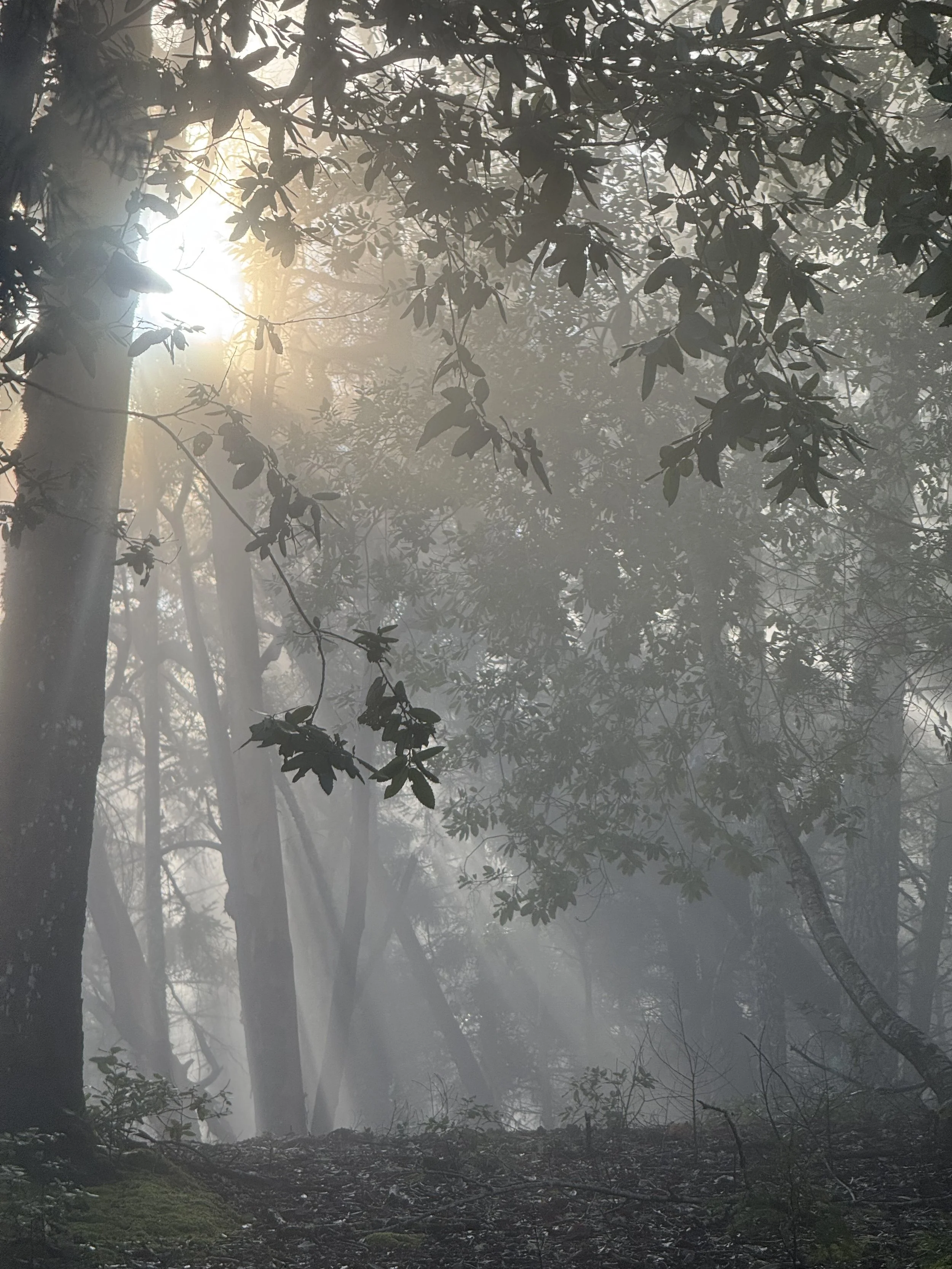
We’re in one of those seasons at Wanosh where the land feels especially alive. The kind of alive that asks something of us. The forest is swelling with both beauty and need. Winter winds dropped branches across pathways, clay is soft again after the rains, and the slopes above the creek are signaling for another round of thinning before fire season. These are the moments when the forest reminds us: this place doesn’t need consumers, it needs allies.
And here’s the honest truth we face every year: the work required to tend a forest campus like Wanosh ...the pruning, the fuels reduction, the fireplace tending, the trail tending, the pole selection ....far exceeds what anyone in our economic system can afford to hire out. The labor of regeneration has outgrown the wallet. So we return to the old truth that keeps proving itself: the forest itself provides.
Over years of tending this land, we’ve learned its rhythm. The round‑pole Douglas firs we use for building come from our thinning work. Other thinnings get organized for ceremonial fireplaces, trail building, hugelculture, and mushroom propagation. Every material mirrors the landscape’s own story, and in using them, we step into a relationship rather than an extraction.
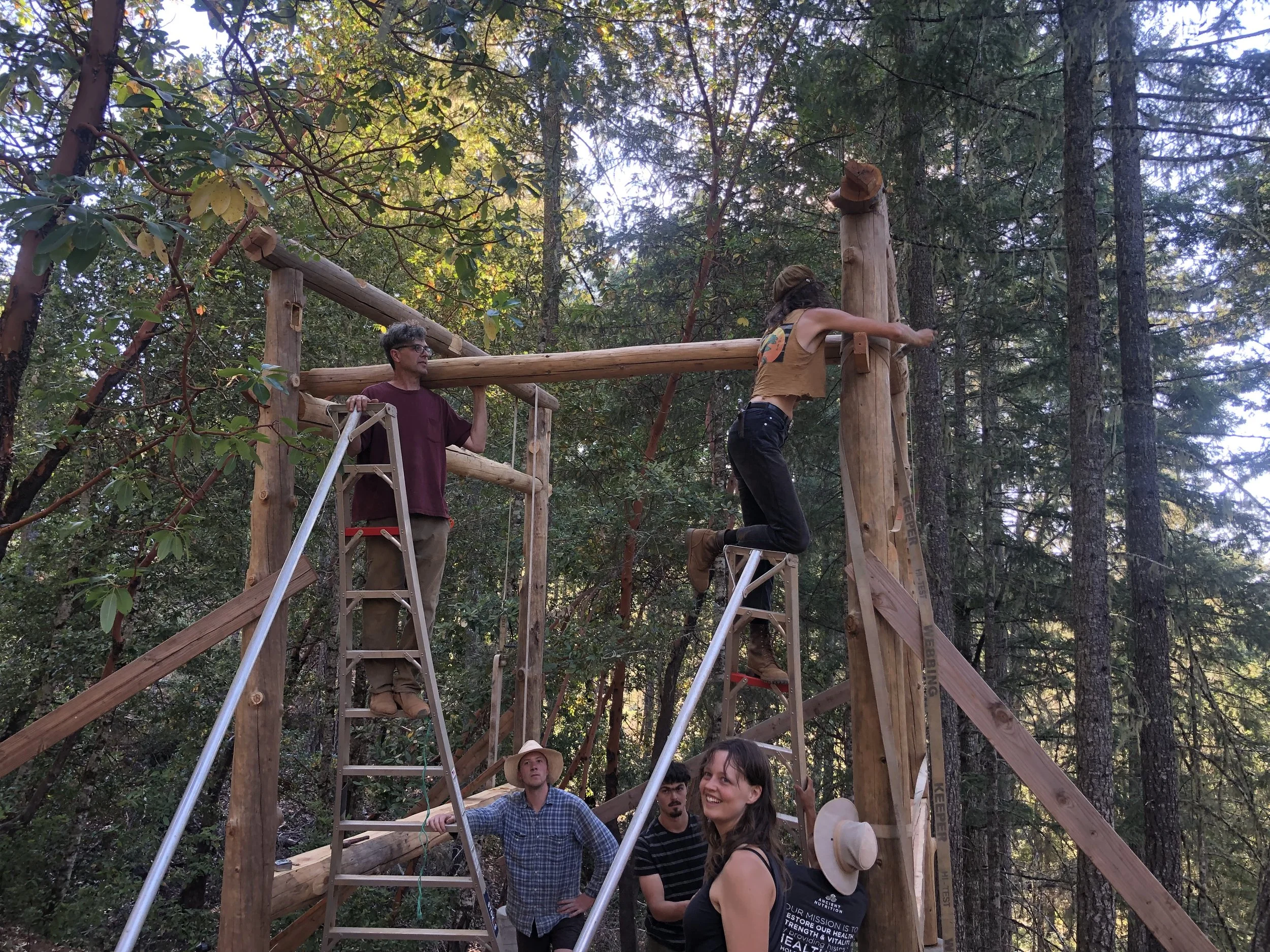
Assembling the ravens roost, a Tea House Style, round pole timber frame, yet to be completed….
You can feel this most clearly during our workshops. Anyone who has joined a timber‑framing weekend, a clay‑plaster immersion, or one of our seasonal forestry weekends knows what I mean. The learning happens, the joinery, the mixing, the organizing, the saw work. But something deeper takes root: people fall into rhythm with the land. Meals in the center, tea under the madrones, late afternoon laughter while clearing a trail, silent moments tending to fire, these are the moments when strangers start to feel like a village.
This is where the modern story breaks down. Many of us carry the inherited wounds of colonization, land ownership, individualism, and scarcity in the way we move. We’ve been taught to equate worth with dollars, belonging with exclusivity, and community with competition. These old stories keep people isolated and keep land under‑tended.
At Wanosh, we’ve been rewriting those agreements in practice. Most of our offerings are available at cost for folks who show genuine need and sliding scale to accommodate reciprocal access. And more importantly, we welcome work exchanges; not as charity, but because they actually provide more value to both the land and the learner. Anyone who comes early for a workshop, stays late, or joins us in the daily rhythms always gains a deeper, more embodied experience than someone who arrives only for the scheduled hours.
It’s the seasonal mornings around the fire. The spontaneous lessons while tending a water line. The shared silence while mixing clay. The side‑by‑side labor that dissolves the boundary between student and villager.
This is the missing thread, the one most people don’t name: the forest can give us materials, but it cannot give us hands. The only viable economy for a place like this or for any true regeneration project is community. The land provides the building blocks; the people provide the heartbeat.
This requires a new honesty about how we value our time, energy, and craft. Yes, we charge for workshops, but the real currency here is devotion, reciprocity, and the willingness to show up beyond the transactional. What if accounting meant the tending between giving and receiving , between forest and fire, human and more‑than‑human?
Because when you stand with a saw in your hand contemplating fires hands, or when you mix clay until it becomes a living texture between your fingers, you realize this is not a transaction. This is a relationship. A prayer in motion.
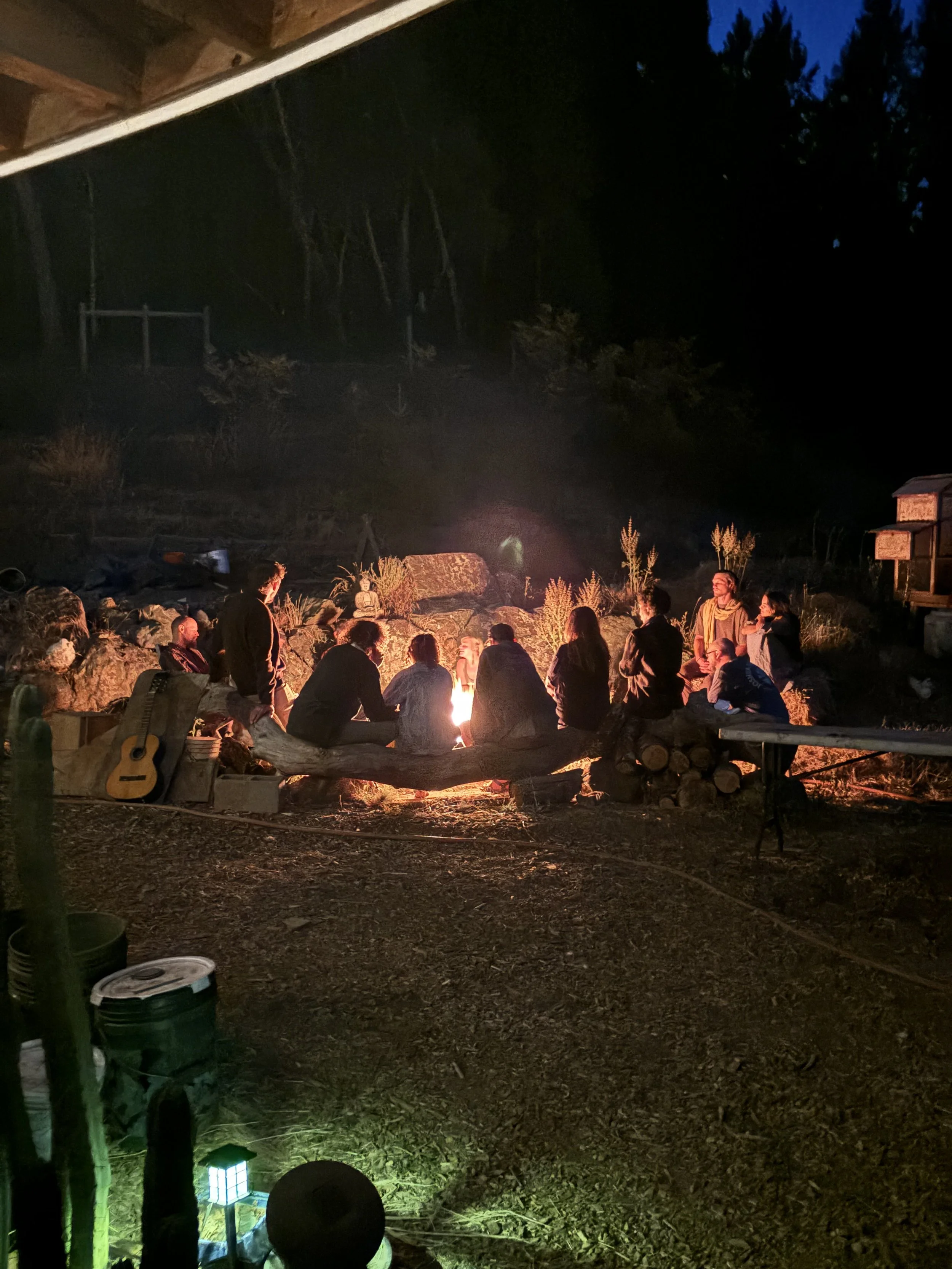
The forest provides for us... poles, clay, stone, medicine, but only when we meet it with presence. And when we do, we rediscover the oldest currency of all: care. Care as sentiment, care as labor, as stewardship, as shared responsibility, prayer made visible. Care that circulates through soil, meals, fire circles, and the many hands that keep a place like Wanosh alive.
So if you’re feeling the tug .. if your body is hungry for skill, for belonging, for the real work of being woven into a place...come join us. Bring your hands, your heart, your curiosity. The land is calling for allies, and together we can answer in a way no single person ever could.
The village rebuilds itself one human at a time. Come be part of it.